
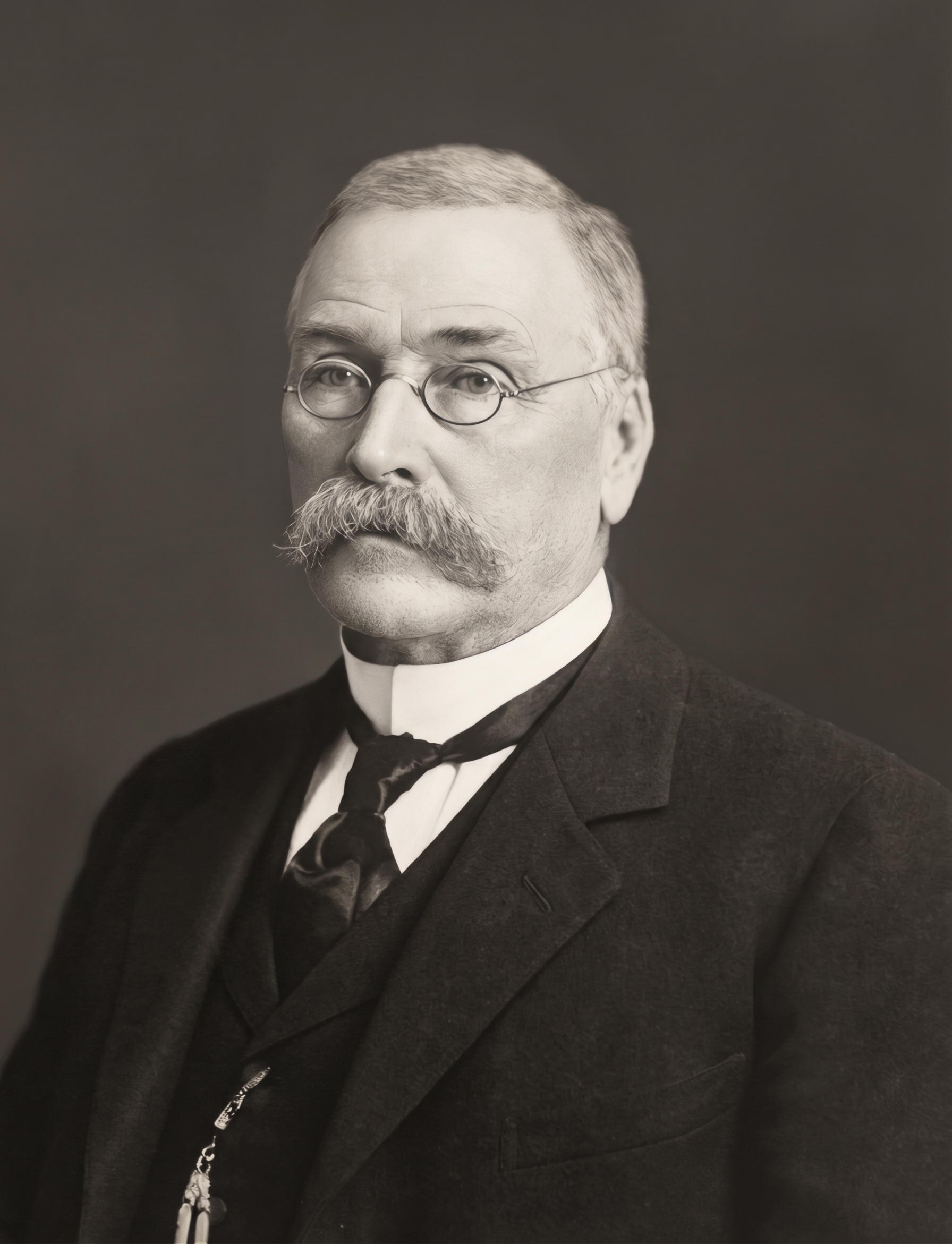
Judge Thomas J. C. Fagg
1822 - 1914
The Frontier Jurist on a Divided Border
The bluffs of Riverview Cemetery look out across a borderland that saw intense passion, fierce political debate, and the deep turmoil of the American Civil War. Resting before you is a man who navigated those turbulent times with extraordinary legal courage: Judge Thomas James Clark Fagg.
Born in Albemarle County, Virginia, in 1822, Fagg moved with his family to Pike County as a teenager. While studying across the river in Illinois, he developed his early political philosophy by listening firsthand to speeches by young frontier statesmen—including Abraham Lincoln and Stephen A. Douglas.
Returning to Pike County, Fagg was admitted to the bar in 1845 and quickly established himself as a legal pioneer. He championed the creation of the county's first independent probate court and served as its very first judge. He went on to represent Louisiana in the Missouri State Legislature, known as a fiercely principled independent thinker.
When the Civil War erupted in 1861, Pike County was torn by strong Confederate sympathies. Yet despite his proud Virginia heritage and Southern family roots, Judge Fagg took a resolute stand to preserve the Union.
Appointed Brigade Inspector and later Colonel of the Missouri Militia, Fagg organized and mustered companies of Home Guards right here in Louisiana to protect the county and scout neighboring areas. In early 1862, he was appointed Circuit Judge. Dispensing justice on the frontier during wartime was hazardous duty—Judge Fagg often traveled from courthouse to courthouse under armed military escort.
In 1866, Governor Thomas Fletcher appointed Judge Fagg to the highest legal body in the state: the Missouri Supreme Court. As an associate justice, he helped restore the rule of law and rewrite the foundational statutes of a state healing from the devastation of war.
After serving on the Supreme Court, Judge Fagg returned home to Louisiana to resume private law practice and later served as Louisiana's Postmaster under President William McKinley.
When you finish your tour and head downtown, make your way down North Main Street. Look for 320 North Main Street—the historic home where Judge Fagg resided, just steps away from his fellow community leaders and the riverfront he worked so steadfastly to protect."